Srinagar, June 24: Jammu and Kashmir Lieutenant Governor Manoj Sinha on Tuesday said that the Union Territory has witnessed a remarkable transformation in public service delivery through digital governance and strengthened Panchayati Raj Institutions over the past few years.
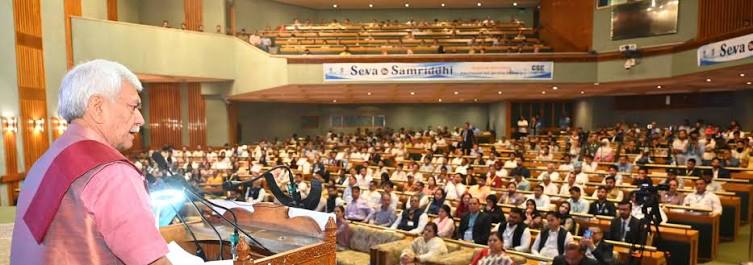
Addressing the regional workshop “Seva Se Samriddhi – Panchayat-Led Service Delivery”, organized by the Union Ministry of Panchayati Raj in collaboration with the J&K Administration, the Lieutenant Governor highlighted the government’s efforts to bring governance closer to citizens and ensure services reach the grassroots level.
He stated that Jammu and Kashmir has expanded its digital governance ecosystem significantly, increasing online public services from a few dozen in 2020 to more than a thousand services today. According to him, initiatives such as Block Diwas, Back to Village, and citizen-centric governance reforms have strengthened transparency, accountability, and public participation in decision-making.
The Lieutenant Governor emphasized that Panchayati Raj Institutions have become key partners in governance and rural development. He noted that the administration has focused on ensuring that local aspirations shape policies and development priorities.
Highlighting digital progress, he said Jammu and Kashmir has witnessed a massive rise in digital transactions and service accessibility. More than 15,000 Common Service Centres (CSCs) are currently operational across the Union Territory, covering the vast majority of panchayats and enabling citizens to access government services closer to their homes.
LG Sinha urged delegates from various states, including Haryana, Karnataka, Uttar Pradesh, Uttarakhand, Himachal Pradesh, and Jharkhand, to study successful governance initiatives implemented in Jammu and Kashmir. He cited programmes such as BEAMS Empowerment, Aapki Zameen Aapki Nigrani, and Your Mobile–Our Office as examples of technology-driven public service delivery.
Calling for greater collaboration among states and Union Territories, he stressed the importance of sharing best practices and innovative governance models to improve last-mile service delivery and strengthen local self-governance across the country.
The Lieutenant Governor described the conference as a reflection of India’s spirit of cooperative federalism and inclusive development. He said future panchayats must evolve into centres of innovation, sustainable development, citizen participation, and public trust.
During the workshop, he also proposed several measures for strengthening grassroots governance, including the establishment of Village Innovation Labs, modern capacity-building programmes for Panchayat representatives, participatory budgeting, promotion of environmentally sustainable initiatives, and enhanced leadership roles for women in community development programmes.
As part of the event, outstanding Gram Panchayats and Common Service Centres from participating states were honoured for their contribution to rural governance and public service delivery. Panditpora Gram Panchayat of Kupwara and a Village Level Entrepreneur from Budgam were among those recognized for exemplary performance.
The workshop, organized with support from CSC-SPV, the Ministry of Electronics and Information Technology, and the Department of Rural Development and Panchayati Raj, focused on digital transformation, citizen participation, innovation, and improved accessibility of public services in rural India.
Senior officials, Panchayat representatives, Village Level Entrepreneurs, civil society members, academic experts, and stakeholders from multiple states participated in discussions aimed at strengthening Panchayat-led governance and improving ease of living in rural areas.