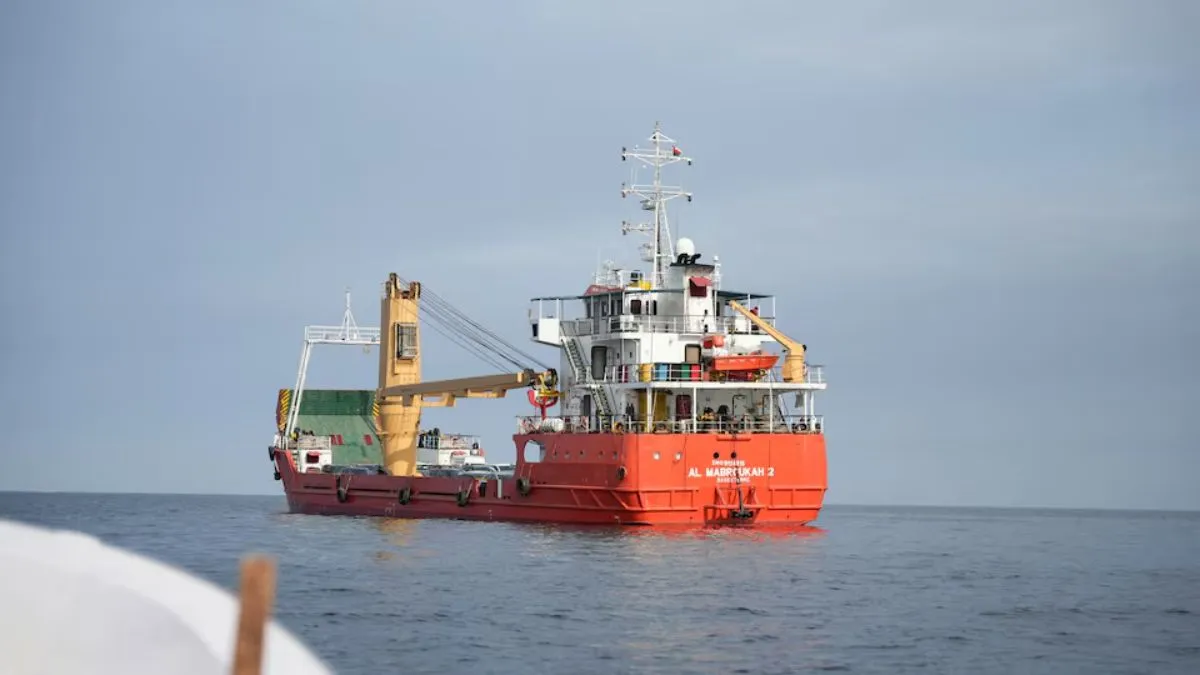
New Delhi: India has raised strong concerns with Iran over the safety of merchant vessels after two India-flagged ships came under fire in the Strait of Hormuz, even as a third tanker, Desh Garima, safely crossed the strategic waterway carrying 31 Indian seafarers onboard. The vessel transited the chokepoint on April 18 and is expected to reach Mumbai on April 22, according to an official government update, marking it as the 10th India-flagged ship to pass through the route since early March amid rising tensions in West Asia.
In contrast, very large crude carrier Samnar Herad and bulk carrier Jag Arnav reported a firing incident during transit in the past 24 hours, forcing both vessels to turn back toward the Persian Gulf. No injuries were reported among crew members. Data from MarineTraffic also indicated that oil tankers Desh Vaibhav and Desh Vibhor reversed course near the chokepoint, taking the number of India-flagged ships currently in the Persian Gulf to 14, highlighting growing disruptions in the region.
Following the incident, India’s Foreign Secretary summoned Iran’s ambassador in New Delhi and conveyed “deep concern” over the safety of merchant shipping and seafarers. The Ministry of External Affairs said the Foreign Secretary stressed the importance India attaches to secure maritime passage and urged Tehran to take immediate steps to facilitate the safe movement of India-bound vessels through the Strait. The government added that the situation is being closely monitored in coordination with relevant stakeholders and confirmed that all Indian seafarers remain safe.
Reports from maritime monitoring agencies suggest that a tanker was approached and fired upon by gunboats believed to be linked to Iran’s Revolutionary Guard Corps, approximately 20 nautical miles northeast of Oman. This escalation is believed to have triggered the diversion of multiple vessels, including India-flagged ships. Shipping monitor TankerTrackers.com also reported that at least two Indian vessels, including a supertanker carrying Iraqi crude, were forced to retreat after coming under fire.
The disruptions come against the backdrop of the ongoing West Asia conflict that erupted on February 28, leaving several commercial vessels and thousands of seafarers stranded in the Persian Gulf. The Strait of Hormuz, which handles nearly one-fifth of global oil and liquefied natural gas shipments, remains a critical global energy corridor. Any disruption in this narrow passage has significant implications for global energy supply and prices.
The current standoff has already contributed to rising energy costs, supply shortages in parts of the world, and fuel rationing in some countries, underlining the far-reaching economic impact of instability in the region. India’s latest diplomatic outreach reflects growing concern over maritime security and the safe passage of its vessels through one of the world’s most vital shipping routes.