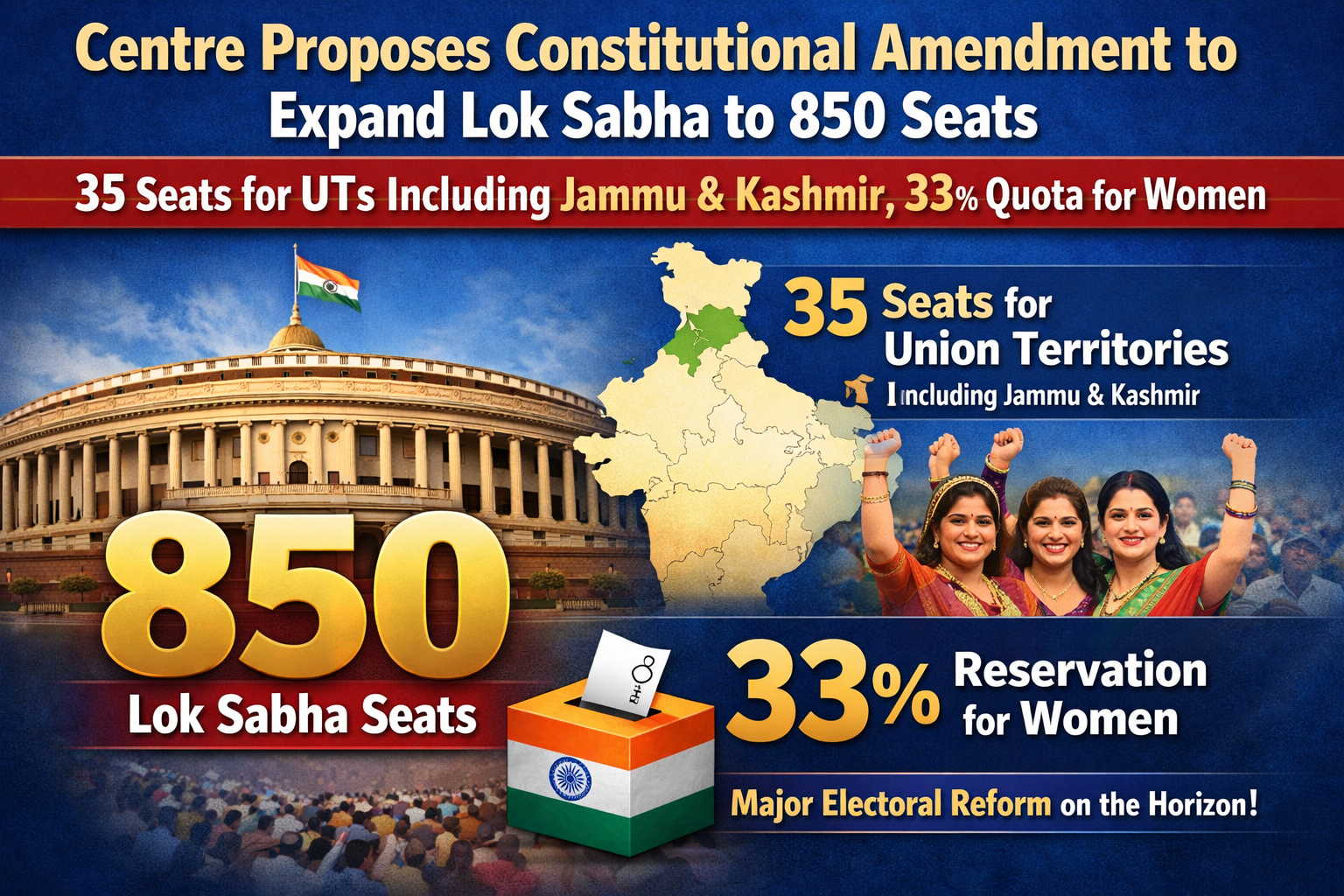
NEW DELHI, Apr 14: In a move that could reshape India’s parliamentary landscape, the Union government has proposed a major expansion of the Lok Sabha, increasing its strength from 543 to 850 members.
The proposal is part of the The Constitution (One Hundred and Thirty First Amendment) Bill, 2026, which is likely to be taken up during a special session of Parliament scheduled for April 16–17.
As per the proposal, 815 seats would be allocated to states, while 35 seats would go to Union Territories, including Jammu and Kashmir.
The Bill also seeks to amend Article 82 of the Indian Constitution, which deals with the process of delimitation—redrawing of constituency boundaries after each Census. The proposed change would remove the mandatory requirement that delimitation must be based on the first Census conducted after 2026, giving the government more flexibility in using earlier population data for constituency reorganisation.
Importantly, the exercise has been linked to the implementation of the Nari Shakti Vandan Adhiniyam, 2023, which provides 33 per cent reservation for women in the Lok Sabha and state assemblies. The reservation is expected to come into effect from the 2029 general elections.
If passed, the proposal could mark one of the most significant changes to India’s electoral structure in decades, with far-reaching implications for representation, governance, and gender inclusion in politics.