SRINAGAR: Chief Minister Omar Abdullah on Tuesday highlighted the critical role of the Tele-Law initiative in expanding access to justice and reducing the burden on courts, particularly for people residing in rural and remote areas.
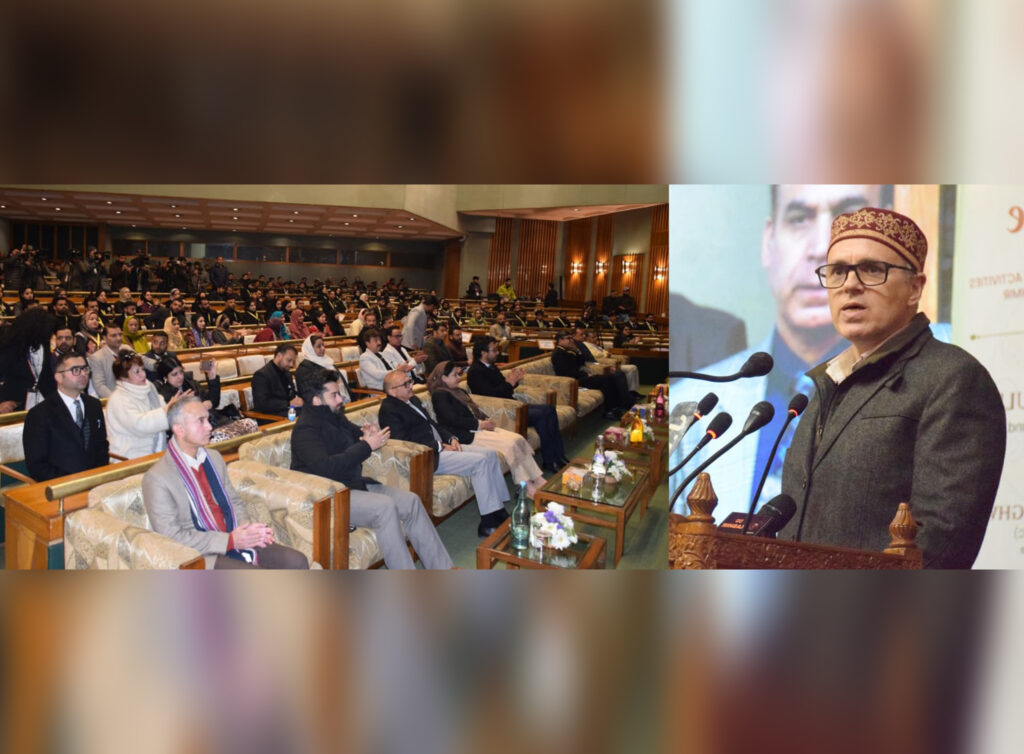
Addressing the Regional Workshop on Tele-Law organised by the Ministry of Law and Justice, Government of India, at the Sher-i-Kashmir International Convention Centre (SKICC), the Chief Minister expressed hope that the scheme would be further strengthened through coordinated efforts between the Union Government and the Ministry of Justice.
“I hope that after this workshop, together with the Government of India and the Ministry of Justice, we will explore ways to further strengthen and expand this scheme. More lawyers can be connected on a pro bono basis so that everyone receives justice at the right time and at the right place,” he said.
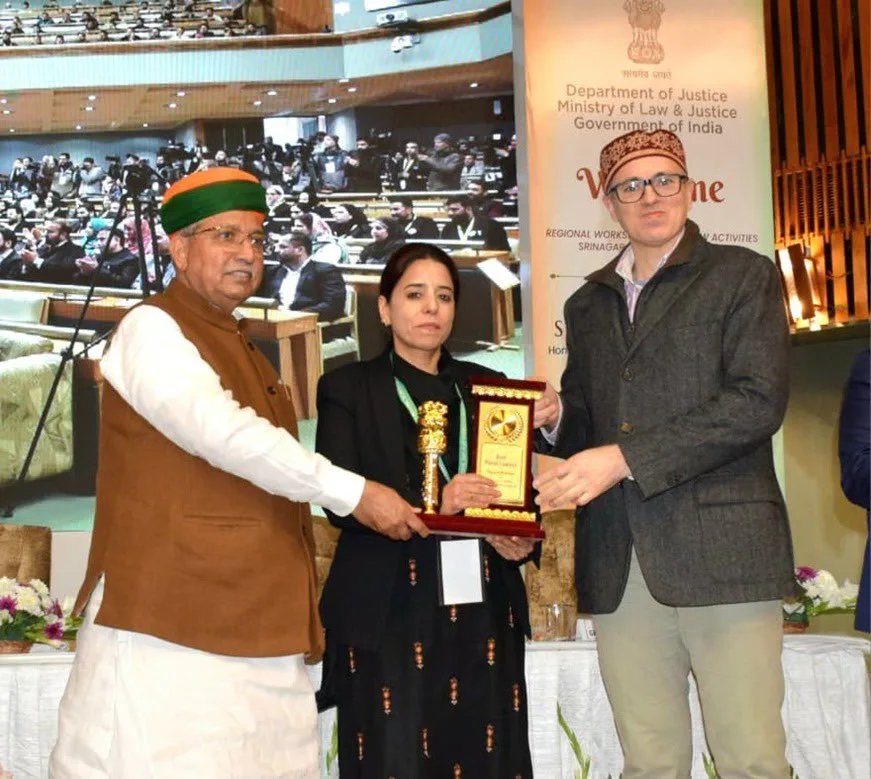
The workshop was held under the Tele-Law initiative as part of Designing Innovative Solutions for Holistic Access to Justice (DISHA), a Central Sector Scheme being implemented by the Department of Justice, Ministry of Law and Justice, Government of India. The event was also addressed by Union Minister of State (Independent Charge) for Law and Justice Arjun Ram Meghwal. Chief Justice of the High Court of Jammu & Kashmir and Ladakh, Justice Arun Palli, Secretary, Law and Justice, Government of India, Niraj Verma, along with senior officials and stakeholders, also participated in the workshop.
Emphasising the importance of Tele-Law, the Chief Minister said the initiative plays a significant role in resolving disputes before they escalate into litigation.
“Only those cases should reach the courts where judicial intervention is necessary. Tele-Law helps by explaining legal provisions, informing people about their rights, and encouraging mediation. If disputes are resolved before reaching court, the pressure on the judiciary can be reduced,” he said.
He noted that while urban populations generally have easier access to legal services, people living in remote and far-flung areas often remain unaware of their rights and available legal remedies.
“For those living in rural and remote areas, accessing a lawyer is not easy. Tele-Law connects such individuals with legal assistance through technology,” he added.
Highlighting the transformative role of technology-enabled legal services, the Chief Minister said such initiatives ensure affordable, efficient, and timely access to justice, especially for citizens in underserved regions of Jammu and Kashmir.
Reiterating that the Constitution guarantees every citizen the right to justice, he stressed that delays in justice delivery effectively amount to denial of justice. “Justice delayed is justice denied. If justice takes too long, it is equivalent to not receiving justice at all,” he remarked.
The Chief Minister observed that courts across the country continue to face immense pressure due to rising case loads and pendency. While acknowledging ongoing efforts by the judiciary and the government to reduce backlog, he said the issue requires a multi-pronged approach.
“There are three ways to reduce pendency — speedy disposal of incoming cases, reduction of existing backlog, and most importantly, ensuring that unnecessary litigation does not reach the courts,” he said.
He further noted that the Tele-Law scheme has expanded considerably in Jammu and Kashmir. “Initially, the scheme covered only two districts; now it extends to all 20 districts. More than 4,000 panchayats are covered, and over 7.5 lakh legal consultations have been provided,” he informed.
However, he added that the success of the initiative should be assessed not only by numbers but also by its reach and impact on the population. “These figures alone are not sufficient unless we evaluate whether they meet the actual needs or whether more can be done. This workshop provides an opportunity to assess our progress and compare outcomes with other states,” he said.
The Chief Minister also emphasised the need to learn from best practices adopted elsewhere and implement them locally for wider benefit. Appreciating the role of Common Service Centres (CSCs) in implementing the Tele-Law initiative, he said the programme has provided renewed purpose and additional work opportunities for these centres.
Expressing confidence in the outcomes of the workshop, he said strengthening Tele-Law through such deliberations would help reach more people and reduce pressure on courts. “If we can strengthen Tele-Law through this workshop, we can extend its benefits to more people and ease the burden on the judiciary,” he added.
The workshop was organised as part of the Department of Justice’s ongoing efforts to enhance access to justice through technology-enabled legal services and to promote informed discussions among key stakeholders.